I’m approaching two years of operating a monthly newsletter, with 19 issues out to date, and I wanted to share some lessons learned, some things I would have changed, and why I still got tremendous benefit even though the subscriber count doesn’t reflect it.
My very first issue was titled “Goals and Why the Little Things Matter,” with an open rate of 75% to 8 people. I reached over 100 subscribers at my highest point so far, and today I have about 50 active readers. I’ll get to the subscriber count reduction in a moment.
Why Growth Was Slow
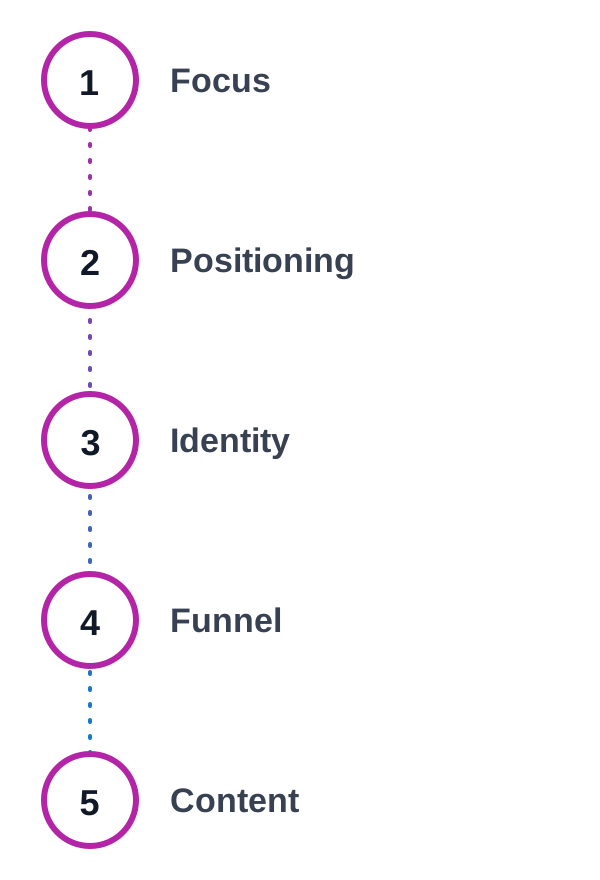
Here’s a few reasons why I think progress was slow.
Focus. The newsletter was never my main focus. Writing the book was, and that’s far more time consuming. That’s why I opted for monthly issues only. Counterintuitive, I know. Most advice says build the newsletter first and write the book second, but that’s not the order I did it in.
Positioning. I struggled with positioning early on. I built things like apps and digital products and banked on people caring about them. They didn’t, partly because I never tested for demand before building. That created a weird product-management, productivity vibe layered on top of personal development, and the two never quite meshed.
Identity crisis. For the better part of a year, I couldn’t decide if the newsletter should be called Modern Compass, the book’s title, or something else, and I still question it carrying the same name. I’ve since noticed Ryan Holiday’s Daily Stoic book and Daily Stoic newsletter carry an identical naming convention, so I’ve decided to stick with it. If Ryan can do it, I can do it.
Marketing funnel. I operated the whole time under the assumption that the newsletter was for people who already wanted book concepts. I positioned it too far down the funnel, practically after the book, which is backwards. The newsletter should help convert cold traffic into eventual book buyers. I’m only realizing this after joining a newsletter cohort with Chenille Basilio and Dylan Redekop two weeks ago.
The wrong stuff. I focused too much on frameworks and concepts and not enough on the pain of a given problem, storytelling, or how looking a layer deeper might reveal a path forward for someone else.
A Few Things I Would Have Changed
Beehiiv paid Boosts, to get more subscribers. I could write a whole article on how I think this particular platform feature is nonsense, using what look like fake Gmail accounts to create the illusion of growth. Suspiciously, nearly all the subscribers I got from Boosts were Gmail addresses, none of them ever opened a single email, and they came from unverified locations. No gripes with the rest of the platform, but don’t waste your money on Boosts.
I’d have ignored AI on strategy from the start. Had I known how much AI would send me into analysis paralysis, on everything from positioning to editing, I would have told my slightly younger, better-looking self to just make what your 30-year-old self would want to read, and start there. Don’t put stock in what AI says you should do. It’s a shit show, and one model will contradict the next. Ask what real people say, or where they’re conspicuously silent, instead.
One thing AI does do well is build and educate. It built this very website, and tools like Claude Cowork and MCP servers have lowered the bar enough to take a lot of the building effort off your plate.
I’d have avoided TikTok. I posted on TikTok a couple times a week for a year, trying to funnel those followers to the newsletter, and it never converted, despite reaching 1,000 followers. I’m not saying it won’t work for you, or that I won’t ever go back, but for me it was a waste of time. And yes, those cringeworthy videos are still up if you look up @themoderncompass.
I’d have started posting on LinkedIn sooner. I’ve gotten more follower and newsletter growth from LinkedIn alone than from every other platform or Meta ad campaign combined, and I ran ads here and there too.
What I Learned
-
People are ruthless with their email, and I know because I’m a zero-inboxer myself. You’d better be valuable, or at minimum offer something memorable and novel. We’re inundated with information, and it’s ridiculous how much of it we forget in a single day. In fact, research shows we lose 90% of new information within a week unless it’s reinforced through repetition, anchored by strong emotion, or introduced through a novel pattern interrupt.[1] Without those triggers, the brain treats the details as noise and purges them during sleep. Repetition alone measurably slows that forgetting curve.[2]
-
I learned not to waste money chasing vanity metrics. Beehiiv Boosts, Meta ads, SparkLoop, LinkedIn ads. I tinkered with all of them at low stakes, and they rarely produced engaged readers when my existing readers weren’t already engaged. Focus on the people who are already paying attention, and on the small things that resonate on social.
-
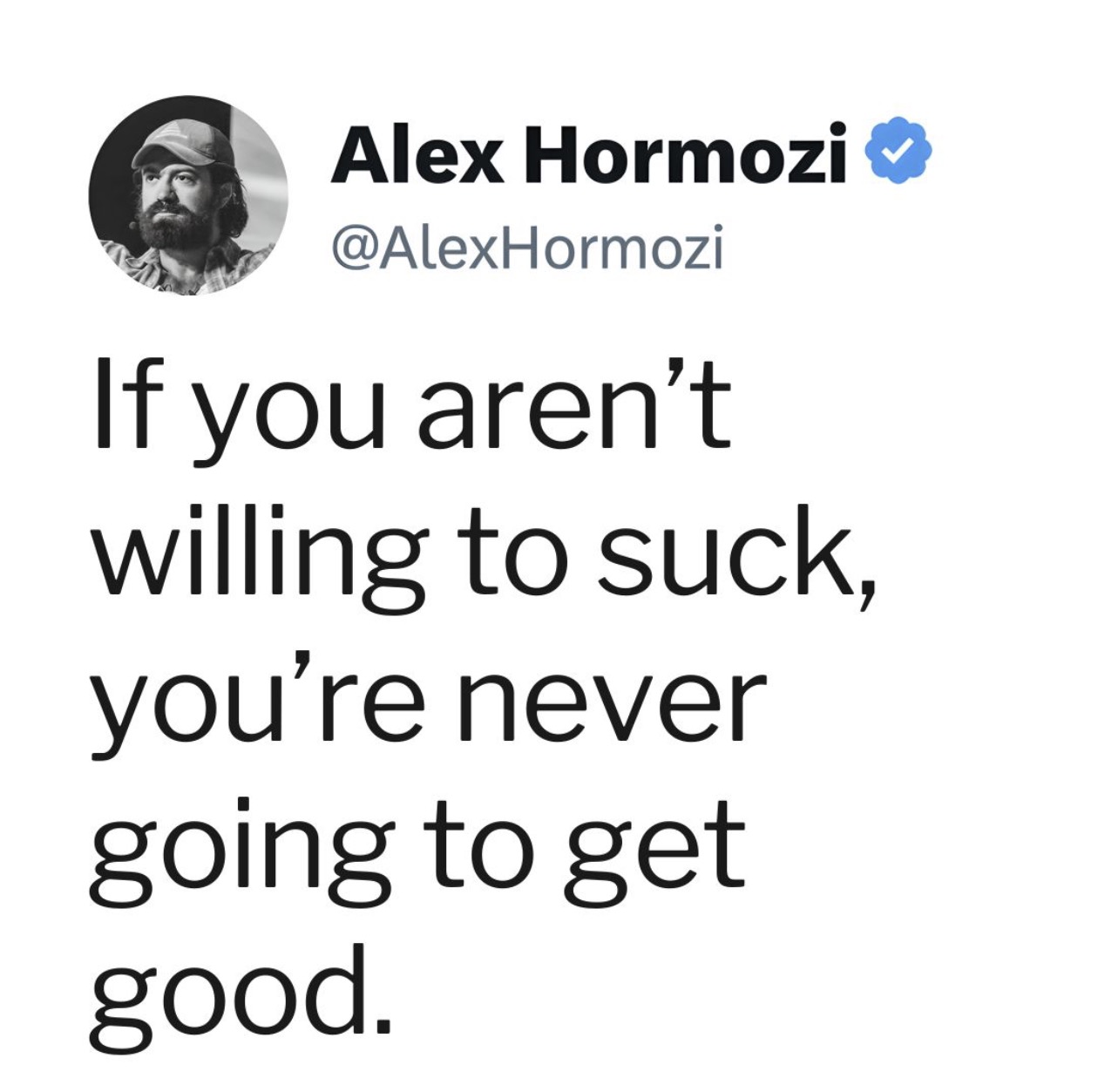
So how do you actually get readers, eyeballs, and subscribers? Sorry to disappoint, I don’t have the full answer yet. What I can tell you works, even if it’s not an overnight success, is posting on social media. For a lot of people, LinkedIn will be the place. For others, a different platform will fit better. It’s free, low risk, and yes, you’ll suck at it at first, same as I did and still do. But through it, you find your voice, and just as valuable, you learn which platform doesn’t convert for you. For me that was TikTok, even at 1,000 followers. For you it might be the opposite.
-
Building authority outside your career or industry is genuinely difficult, though not insurmountable. It takes a long time, hopefully less for you than it has for me, but I’ve found vulnerability and trust are the two things that actually move the needle.
-
The one thing I feel I did right was building a list I actually own the emails for, through Beehiiv, Kit, or similar, instead of a LinkedIn-native newsletter. You can grow faster with the latter, but you don’t own the emails, so you can’t own the experience. And like most LinkedIn-native newsletters, I subscribe and then never see the issue again unless I happen to catch the creator’s post. Skip that method. Build an email list you own.
Why Fifty Real Readers Beat a Padded Hundred-Plus List
Half my newsletter list, built up through Beehiiv Boosts and Meta ads, had never opened a single issue, just dead weight sitting on top of my real numbers. My unsubscribe rate has stayed low the whole time because I only publish monthly, so the drop from 100-plus to 50 wasn’t churn, it was me finally cutting names I never should have paid to acquire. A subscriber who never opens an email is a rounding error with your name on it, and fifty engaged readers will tell you more truth about your work than a padded list ever will.
My Verdict
Newsletters are a huge opportunity. Look at everything I learned, almost entirely free, through trial and error. They do require time, which is why landing on the right cadence is crucial, based on how much focus you’re actually willing to give it. Treat every issue as a chance to tell your best story yet, and you can’t go wrong.
If you’re eager to start your own, hit me up on LinkedIn. I can point you to a few pros running ongoing programs. In the meantime, why not subscribe to the Modern Compass newsletter? The next issue might be the one that shows you a new angle to finally go all in.
Subscribe to the Modern Compass newsletter →
Always… follow your compass.
- Josh
Resource Section
- [1] Psychology Today. (2025). Why You Forget So Much of What You Just Learned. Psychology Today Blog. psychologytoday.com
- [2] Udemy Business. (2024). Overcoming the Forgetting Curve in Learning. Udemy Blog. udemy.com