I’m writing this from a week before a Disney World trip, heavily focusing on what is Character, how I want to approach and define it within Modern Compass, and how to make it more approachable.
I’ve never felt that connected to the term character. It’s always felt just a little elusive to me and something that didn’t feel all that tangible.
However, after a lot of initial research early last year, that is what became the 4th and final compass direction of the Modern Compass framework.
Fitting then, Character is also the last group of chapters to write to complete an initial first pass of this book.
The Problem with Traditional Character Definitions
Some say character is values and traits, some it’s your grit and determination, others it’s your virtues and morals.
One example states: You are born with X trait and Y trait and that’s what you’ve got, make the most of those.
Another example may state: Your actions are good, so you have good character.
All of these descriptions are okay in some ways or another, but for me, those either:
- Didn’t provide a practical way to approach it
- Felt like they didn’t allow agency to change and grow
What Connected the Dots for Me
Character isn’t something you just have - it’s something you develop.
Character is the product you display to the world through actions, effort, and lived experiences.
While our Character is always on display whether we like it or not, the refinement of that product greatly depends on:
- The effort put into understanding and developing Character
- Growth in the rest of your compass including self, relationships, and trust
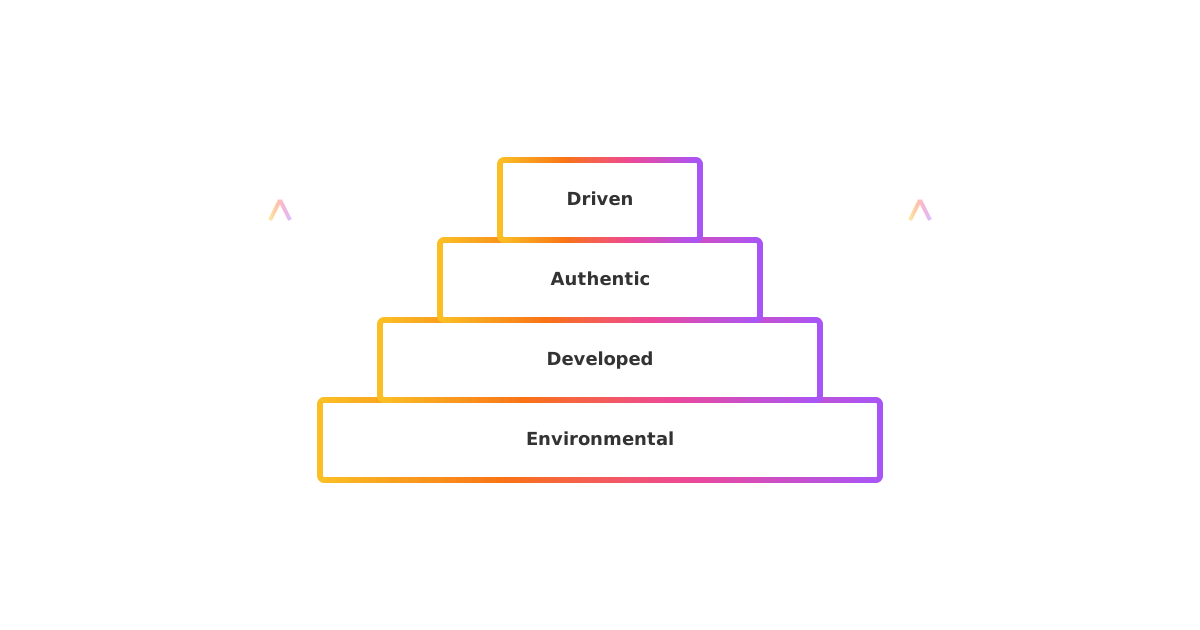
Character in Modern Compass, similar to the other compass directions, are built through 4 progressive layers, starting from the bottom up.
I think you’ll find that this progression has always been there. I’m just giving more language to it.
The 4 Layers of Character
Layer 1: Environmental
The actions shaped by what your environment installed in you.
You’re displaying what you absorbed, not always what you chose.
Example: Something doesn’t go your way. You react the way you were wired or learned to.
Often this could resort to:
- Blame
- Spiral
- Quit
- Bulldoze
Whatever you saw modeled, you repeat.
Layer 2: Developed
You’re taking action against inherited scripts and doubling down on the ones that feel right for you.
Creating new patterns through deliberate effort that didn’t exist in your environmental programming.
Example: Something doesn’t go your way. You catch the old reaction and choose differently.
Pause. Assess what’s in your control. Respond with intention.
Layer 3: Authentic
Clear patterns emerge through your actions and where effort is placed over time (how much time depends on your consistency).
These patterns reveal your identity - who you actually are based on:
- The actions you take
- Where you spend your time and effort
- What you’re willing to fight for
Here, your actions align with your internal understanding of you to create a powerful version of yourself.
Example: Something doesn’t go your way. Handling setbacks with composure is just who you are now.
You’ve built that through consistent practice.
Layer 4: Driven
Your actions point outward, toward something bigger than yourself.
You’re consistently taking actions or putting forth effort that serves beyond your own comfort or success.
Example: Something doesn’t go your way. You see it as a chance to model resilience for others.
Your response is shaped by what you’re demonstrating, not just how you’re feeling.
The Thread That Runs Through All Four Layers: Integrity
At every layer, ask yourself:
“Are the people around me better or worse off because of my Character?”
You can’t progress without answering this honestly.
Why This Framework Makes Character Tangible
Character stops being abstract when you understand the four layers describe where your actions come from.
You’re always displaying character. The question is which layer you’re operating from.
Moving Between Layers: A Real Example
Let me give you a personal example from my year.
Environmental Response (Old Pattern)
When my writing wasn’t getting traction early in the year, my environmental response was to quit or blame external factors - “people don’t care about this stuff,” “the algorithm is against me.”
Developed Response (New Pattern)
I caught that pattern and chose differently. I paused and assessed: What’s in my control? My consistency, my quality, my distribution strategy.
Authentic Response (Integrated Pattern)
Over months of consistent writing and refinement, handling setbacks with composure became just who I am now. I don’t spiral when a post doesn’t perform. I analyze, adjust, and keep going.
Driven Response (Outward Focus)
Now when I encounter setbacks, I see them as opportunities to model resilience for newsletter subscribers and beta readers. My response is shaped by what I’m demonstrating to others, not just how I’m feeling.
The Gap Between Layers
Most people operate primarily in Environmental and occasionally touch Developed.
The gap between Environmental and Authentic is the hardest to cross because it requires:
- Consistent effort over time
- Willingness to catch old patterns
- Discipline to choose new responses repeatedly
But once you’re in Authentic, the patterns become self-reinforcing. You’re not fighting against your wiring anymore - you’ve rewired yourself.
Interactive Reflection Prompts
In place of an activity this month, I’m offering some reflection prompts on this topic and seeking your feedback:
Question 1
Does thinking about Character as a product built through your actions, effort, and lived experience make it feel more tangible than how you’ve thought about it before?
Question 2
Looking at the four layers, which one do you think you’re currently operating at most of the time?
What recent action or moment made you land on that answer?
Question 3
Is there a specific layer you’d like me to expand on in a future newsletter issue?
Question 4
What part of this framework, if any, didn’t quite land or felt unclear?
Question 5
Have a personal story about moving between layers or a moment that shifted how you think about your own character?
Reply and share it. I’d love to feature a reader story in a future issue.
How to Use This Framework
Step 1: Identify Your Current Layer
When something goes wrong this week, notice your default response. Is it:
- Environmental (reactive, inherited pattern)
- Developed (intentional, choosing differently)
- Authentic (natural, integrated pattern)
- Driven (outward-focused, modeling for others)
Step 2: Notice the Pattern
What triggers the old Environmental response? Criticism? Failure? Uncertainty?
Step 3: Choose One Developed Response
Pick ONE situation where you’ll catch the old pattern and choose differently.
Not five. Just one.
Step 4: Track Progress Over Time
As you consistently choose the Developed response, notice when it starts feeling more natural (moving toward Authentic).
Step 5: Ask the Integrity Question
At every layer, ask: “Are the people around me better or worse off because of my Character?”
Let that guide your progression.
The Bottom Line
Character isn’t fixed. It’s developed.
You can operate from:
- Environmental - What was installed in you
- Developed - What you’re intentionally building
- Authentic - What’s integrated into who you are
- Driven - What you’re modeling for others
The progression happens through:
- Awareness (catching old patterns)
- Choice (responding differently)
- Consistency (building new patterns)
- Integrity (ensuring people are better off because of you)
Character is the product you display. Refine the product.
Always… follow your compass.
- Josh
More Resources
- Need to understand persistence? → Read The 4 Pillars of Persistence
- Want accountability to build new patterns? → Read Why Accountability Comes Before Habits
- Ready to build your compass? → Explore the Modern Compass book